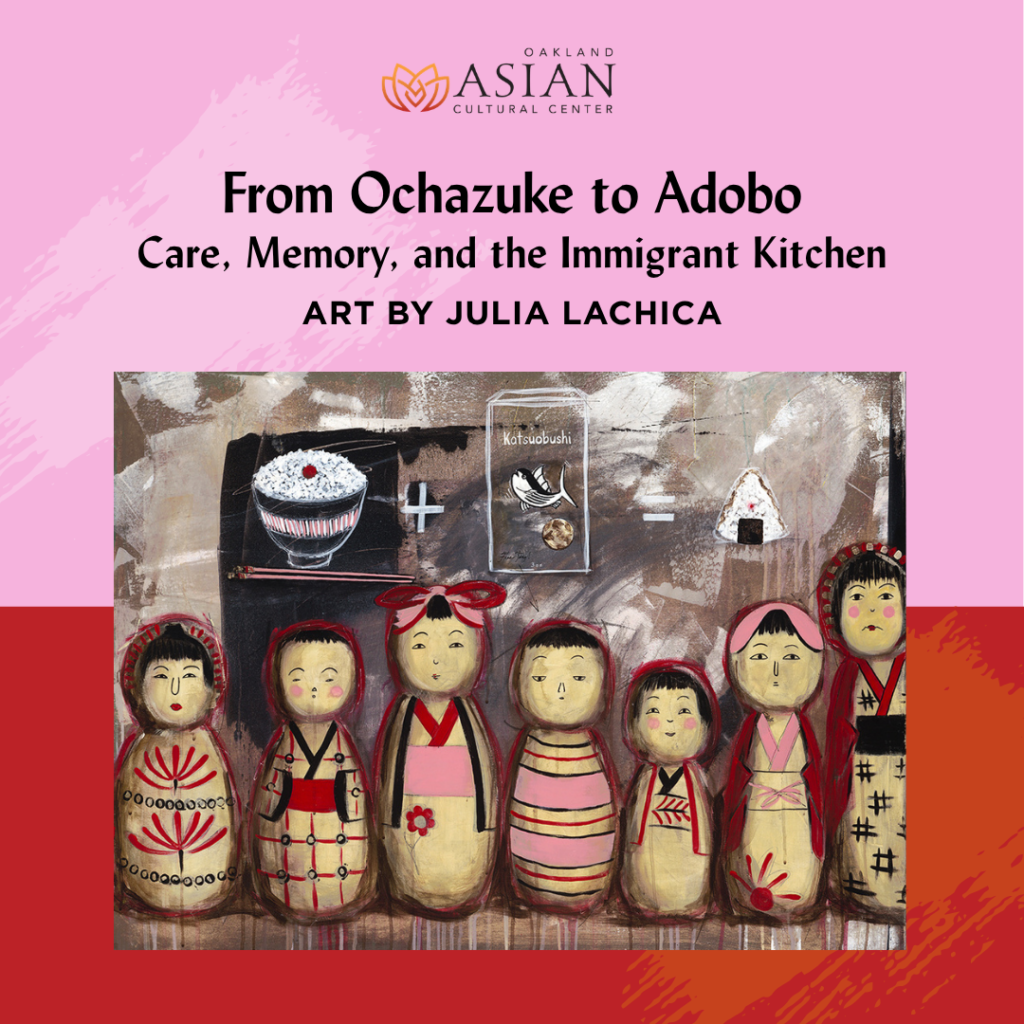
From Ochazuke to Adobo: Care, Memory, and the Immigrant Kitchen with Julia LaChica
On view through August 15, 2026
OACC open hours Wed-Sat, 12-5 pm
Closing Reception and Artist Tour: Sat, Aug 15, 1-2 pm
FREE
From Ochazuke to Adobo: Care, Memory, and the Immigrant Kitchen is a multidisciplinary installation that grows out of artist Julia LaChica’s ongoing work on caregiving, family history, and diasporic identity. Building on themes first explored in A Promise Unspoken, a memorial project for her mother, this installation extends that inquiry into food, migration, and the ways culture is continually made within everyday domestic spaces.
LaChica understands ochazuke and adobo as living archives—recipes as pedagogy, kitchens as classrooms, and caregiving as cultural transmission. Growing up Japanese/Filipino in San Francisco, she learned culture not through formal institutions but through daily acts of cooking, storytelling, and adaptation. This project situates those intimate memories within broader immigrant and diasporic histories.
Through visual art, text, and ritual gestures, she examines how families preserve, hybridize, and reinvent traditions across generations. LaChica is particularly interested in how memory is carried forward within queer, mixed-race, and diasporic communities. In this work, cooking and caregiving become forms of cultural production and resistance—acts through which we sustain one another and make belonging possible.
The exhibition will be on view from June 24-August 15 during OACC open hours (12 noon-5 pm) or by appointment. The August 15 closing reception and tour with Julia LaChica is free to attend with registration at the link below. Light refreshments will be served.
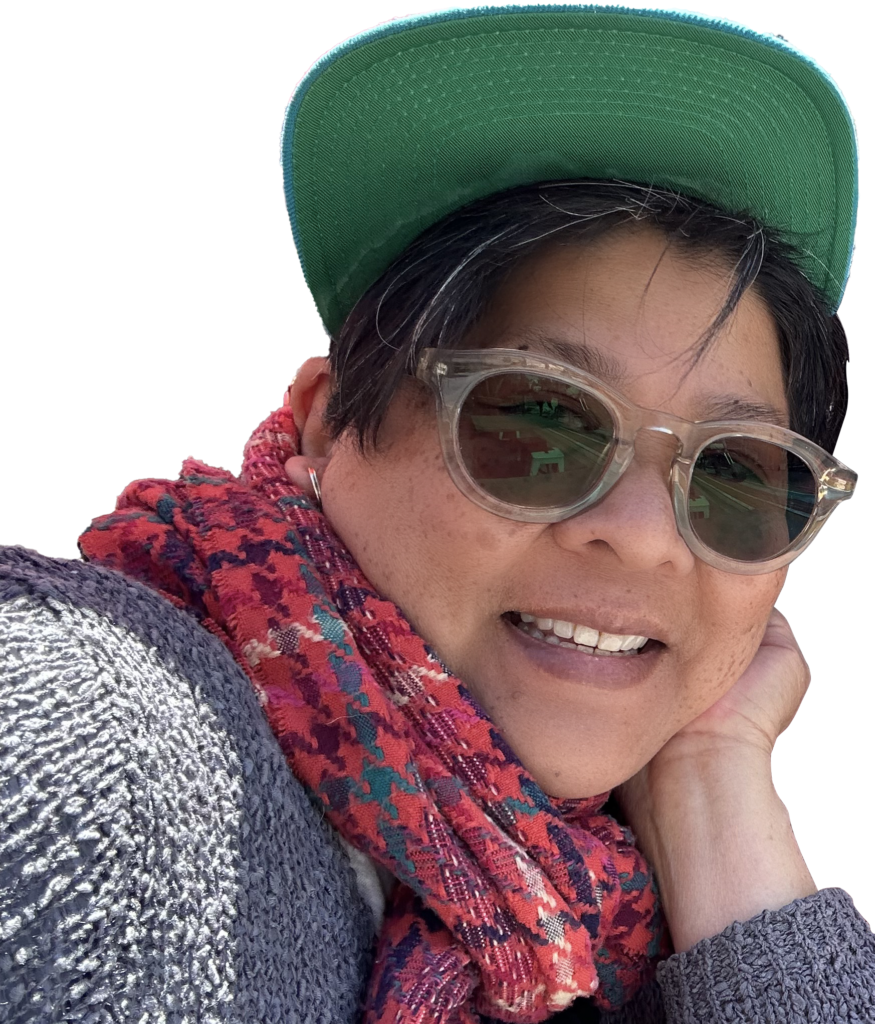
Julia LaChica is a queer Japanese/Filipino multidisciplinary visual artist, designer, and educator based in Oakland, California. Her work explores intergenerational memory, caregiving, diaspora, and the everyday rituals through which culture is made and transmitted. Drawing from family archives, spoken word, and a visual language shaped by protest and pedagogy, LaChica centers domestic spaces—kitchens, altars, and archives—as sites of cultural production, resistance, and healing.
APIAEast AsianExhibitionFreeJapanese-AmericanLGBTQ+Multi-culturalSoutheast AsianVisual Art
Coming to OACC? Plan your visit.
Get information about location, parking, and hours.